

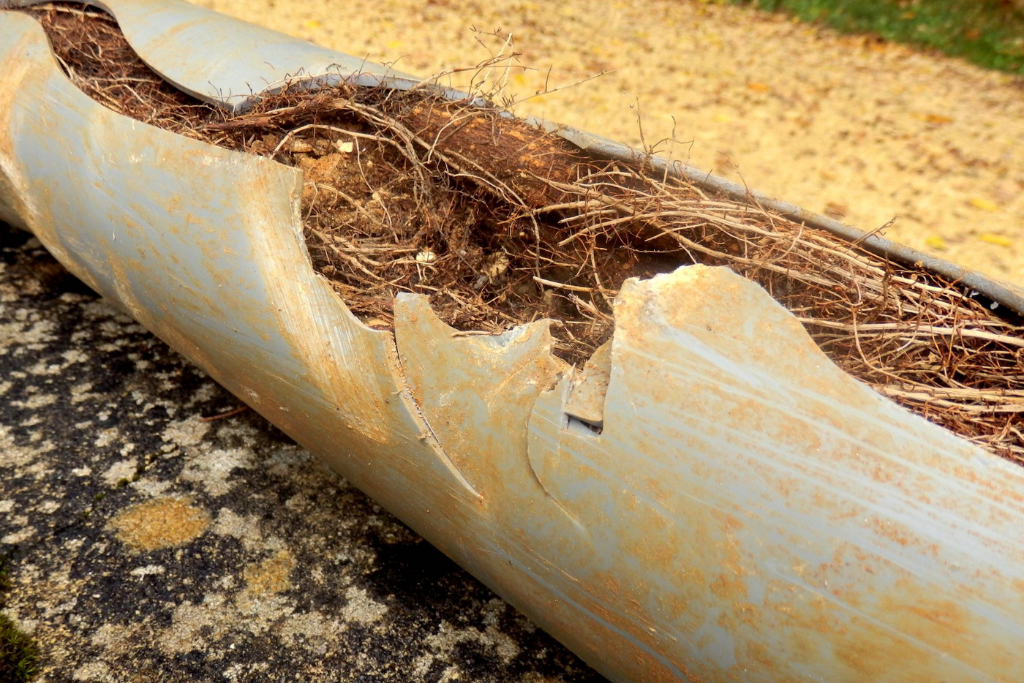
Tree roots inside a sewer line are one of the most common and destructive plumbing problems in older Vancouver neighborhoods such as North Vancouver, Burnaby, and Coquitlam. Large trees naturally seek out moisture, and even the smallest crack or loose joint in an older sewer pipe becomes an entry point for roots. Once inside, the roots grow rapidly, feeding on moisture and nutrients from wastewater. Over time, they form dense root masses that trap toilet paper, wipes, grease, and debris, eventually leading to severe blockages and sewer backups.
In older homes with clay, concrete, or early-generation PVC pipes, the joints are often not perfectly sealed. Tree roots detect the moisture escaping from these weak points and push their way inside. What begins as a tiny root strand quickly expands into a thick network that reduces the pipe’s capacity. As the root mass grows, drains throughout the home begin to slow down, toilets may struggle to flush, and gurgling sounds develop as trapped air tries to escape through partially blocked lines.
One of the earliest warning signs of root intrusion is gurgling in toilets, bathtubs, or floor drains. This sound indicates that wastewater is encountering resistance inside the pipe. Another common sign is water backing up into the bathtub or floor drain—especially when the toilet is flushed or the laundry machine drains. Because bathtubs sit at a lower elevation than toilets, they are often the first place where a sewer backup becomes visible.
Repeated clogs, slow drains throughout the home, and frequent need for snaking are strong indicators that roots are obstructing the main sewer line. If the problem keeps returning after temporary cleaning, it almost always means the roots have fully taken hold and deeper cleaning or pipe repair is required.
A proper diagnosis begins with a drain camera inspection. A camera reveals the exact location and severity of the root intrusion, showing whether the pipe is cracked, misaligned, collapsed, or simply overgrown with roots. This step is essential because choosing the wrong solution—such as snaking when the pipe is actually broken—can waste time and money without solving the underlying issue.
For minor root intrusion, mechanical root cutting can provide temporary relief by trimming the roots inside the pipe. However, in many cases, Hydro Jetting is the most effective solution. High‑pressure jetting removes not only the roots but also grease, sludge, and debris that have built up around them. Jetting often restores the sewer line to near‑original capacity.
If the camera inspection shows severe damage—such as broken pipe sections, separation at the joints, or a sagging (belly) in the line—cleaning alone will not solve the problem. In these situations, the damaged portion of the sewer line must be repaired or replaced. Proper repair ensures the pipe is sealed and prevents roots from re‑entering the system.
Leaving root intrusion untreated can eventually cause the pipe to collapse completely, turning a manageable repair into an emergency excavation. Sewer backups can also damage floors, walls, and household finishes, and create hazardous health conditions due to contaminated wastewater.
Evercore Plumbing provides complete sewer root removal services across Vancouver, North Vancouver, Burnaby, Coquitlam, and West Vancouver—including Hydro Jetting, mechanical cutting, camera inspection, and full sewer line repair. Our technicians accurately diagnose the problem and recommend the safest and most effective long‑term solution.
If your drains are slow or you hear gurgling noises, tree roots may already be growing inside your sewer line. Evercore Plumbing offers same‑day root removal, Hydro Jetting, and sewer camera inspection.
📞 Call Evercore Plumbing Today: (604) XXX‑XXXX
🛠 Root Removal • Hydro Jetting • Sewer Camera Inspection • Sewer Line Repair